
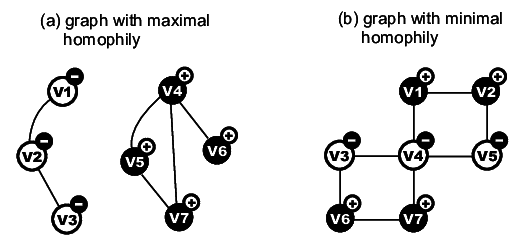
“Homophily is the tendency of people to form bonds and connections with others who are similar to them. Derived from Greek words meaning "love of sameness," it explains why friendships, marriages, and groups often form between people with shared traits like age, race, gender, beliefs, or background.”
Birds of a feather flock together is an English proverb. The meaning is that beings (typically humans) of similar type, interest, personality, character, or other distinctive attribute tend to mutually associate.
What does this have to do with Kim Hellberg and football? Quite a lot, actually. Managers like Hellberg are idealists - they see football differently from the ‘normal’. Hellberg himself has name-dropped Marcelo Bielsa and Roberto De Zerbi as his two main influences in “pure football” terms when it comes to his outlook. His assistant David Selini said on the ‘Nordic Football Podcast’, “Our football is very much principle or concept driven, rather than system and formation driven”
The concept in question that Hellberg is most aligned to is La Nuestra, meaning "our way" or "ours", which one of Hellberg’s main influences, Marcelo Bielsa, was a byproduct of the pioneer of the new Argentinian way in the late 70s by El Flaco César Luis Menotti. Bielsa in the early 90s with his Newell’s side had clear similarities and continued to do so throughout his career. It’s an idea originating from Argentinian football which aligns with the outlook of football being player driven. Goals without borders describes the ideology of La Nuestra as
“The core of Argentina’s La Nuestra football identity is improvisation. Not randomness, not lack of structure, but the belief that the player with the ball can create something beyond the diagram. In this view, football is not fully controlled from the bench. It is interpreted by the player.
That is where the mythology of the Argentine number 10 becomes central. The enganche, the playmaker between midfield and attack, became one of the most important figures in Argentine football culture. The role asks for vision, timing, disguise, and nerve. It is not only about passing. It is about pausing at the right moment, seeing the field before others see it, and turning pressure into opportunity.”
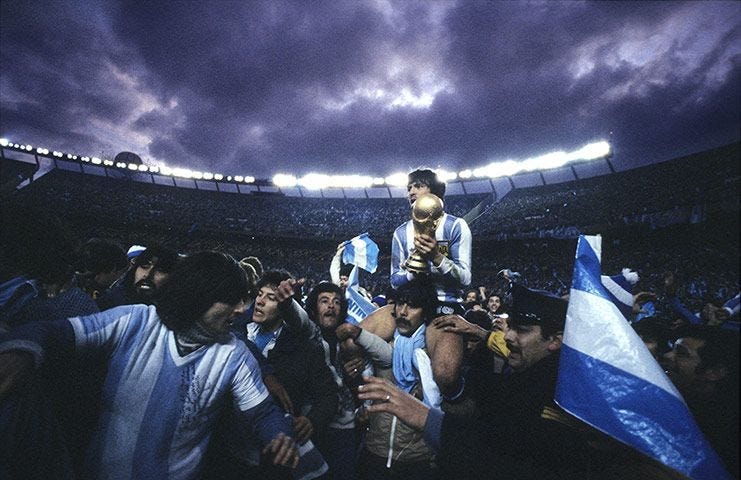
There are branch-off concepts like this one in question with Fernando Diniz and José Alberto López - not every concept has the same defined principle within itself. Hellberg’s niche is the wide five-player rule, I like to call it. Where the idea is diagonal - in fact, in Boro’s win away at Sheffield United last season, you hear on the broadcast Hellberg himself shouting “DIAGONAL DIAGONAL” because a core idea of his is to go against rhythm and momentum vs a defensive block with five players in proximity to one another.

You can even hear this in his training session that Boro put out.
“Don’t just play around them. Go in central! Yes, that’s the central play! Don’t just play around; it doesn’t help us! Yes, that’s the quality. The central combinations! Being brave!”
“I need players who are always aware of making decisions in every situation. You can be far away from the ball ‘changes body shape’ - that’s what we need and that’s what we’re training on”
The idea is simple; the execution isn’t. Synergy, synergy, synergy. Understanding the player next to you is the most important - and in that moment of play, the opposition doesn’t understand you because it goes against their rhythm, their mental process.
Here is Hellberg again talking about central combinations. I really can’t stress enough what he says here and why it plays a part in the conclusion of this article.
To fully understand what a Hellberg team is in it’s max, it’s:
Diagonality
Relational combinations
Playing against the momentum
Pass and move football
The best version of this was the already-mentioned Sheffield United away performance. And this is where I bring to the table the crux of this article, which is the debate I’ve somewhat started within Boro Twitter about the idea of a ‘Hellberg player’. I think people have misunderstood what I’ve meant by that, and all of the above plays a part. Firstly, I want to point out that managers, 99% of the time, don’t adapt their concepts, but the players within that concept change. And if they do stray from what they know, it all falls apart. Hellberg has been coaching, to a large degree, the same way for over a decade.

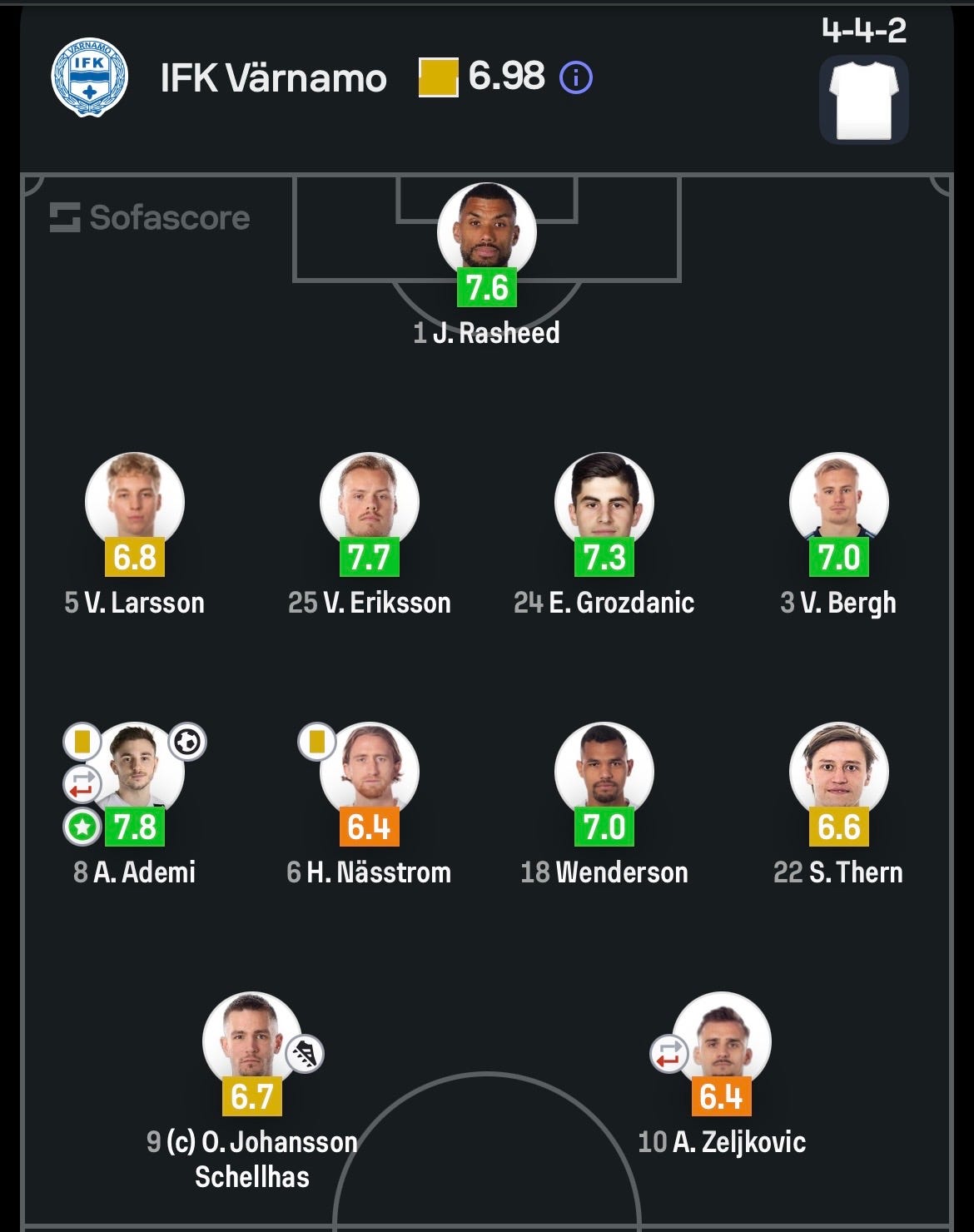
Take his IFK Värnamo side as an example. Back three build with the left back tucking in, the right back free to decide whether to stay wide or drift inside, with the rest of the players close to one another.
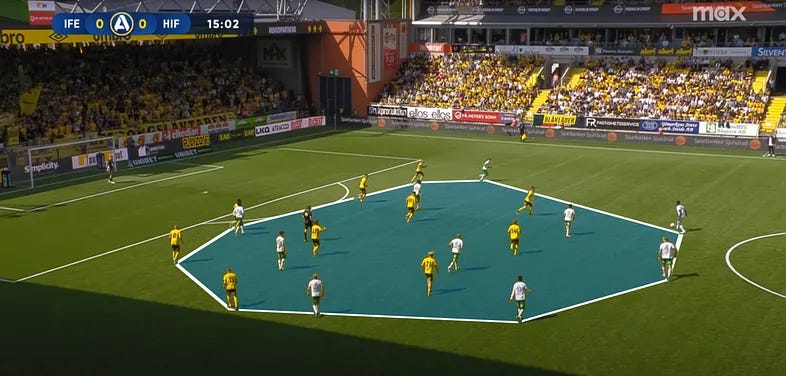
Now we move to his Hammarby side, and the concepts and principles are the same, with a few tweaks, including adding a proper winger to the system in Dukanovic. Left back tucking in, players close to one another.
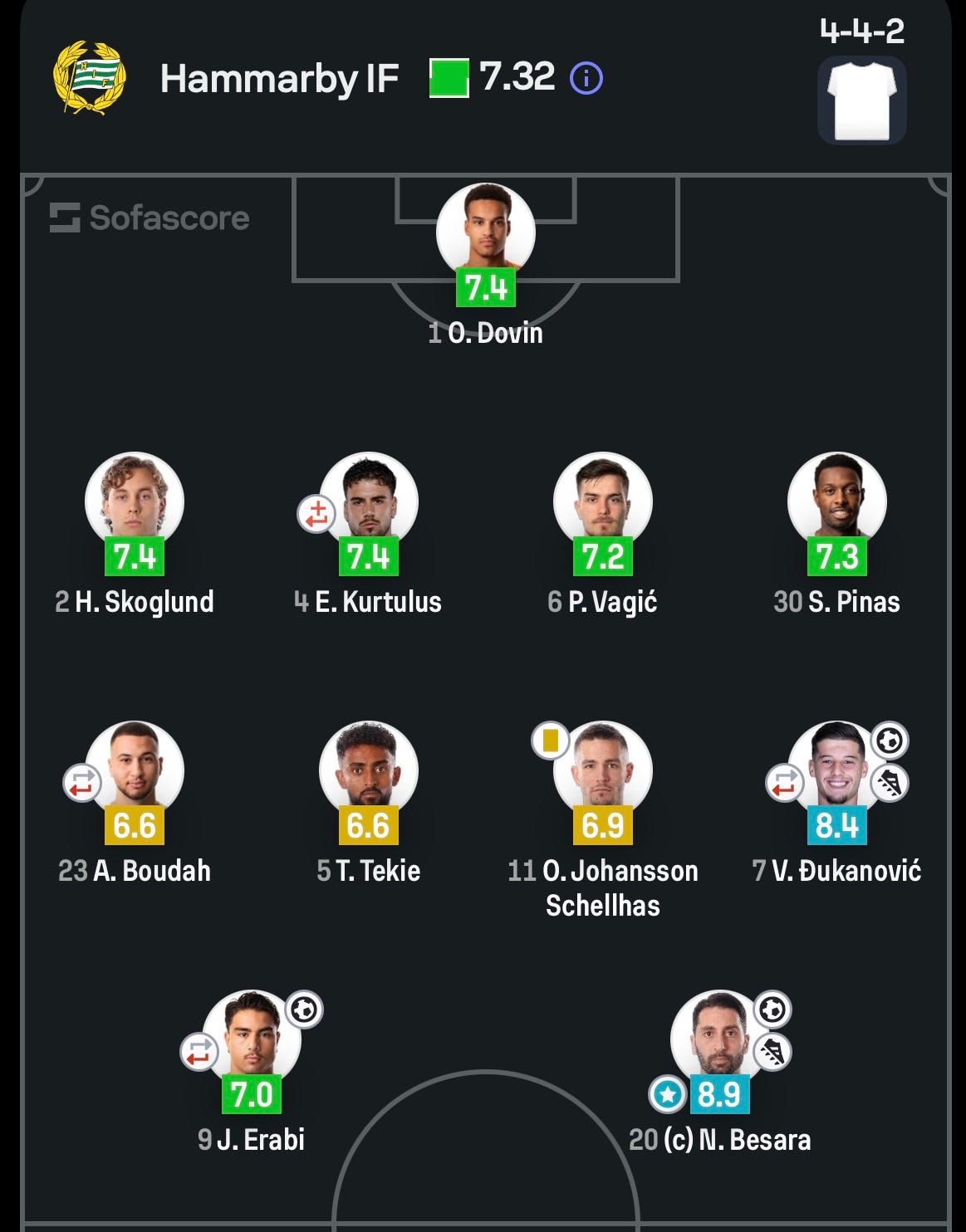
“We never really change, we just think that we do.”
The common theme that has brought Hellberg the most success throughout his career has, on paper, been a 4-4-2 setup with at least four players who have midfield-like tendencies. Players who make short, quick passes, who understand timing and space, and who have similar skill sets and think similarly. Managers do not adapt well. Arguably the greatest ever manager, Pep Guardiola, tried to adapt his concepts by signing players with physicality and athleticism over technically first players, and that cost him a title. Coach what you know, not what you don’t. I’m bringing up the aforementioned Sheffield United game again - look at who started and the instincts of those players. Morgan Whittaker is not my type of player; he’s incredibly frustrating, but one thing he is excellent at, and why he will always get picked, is his understanding of combinations with his teammates. Conway’s first goal perfectly encapsulates this.
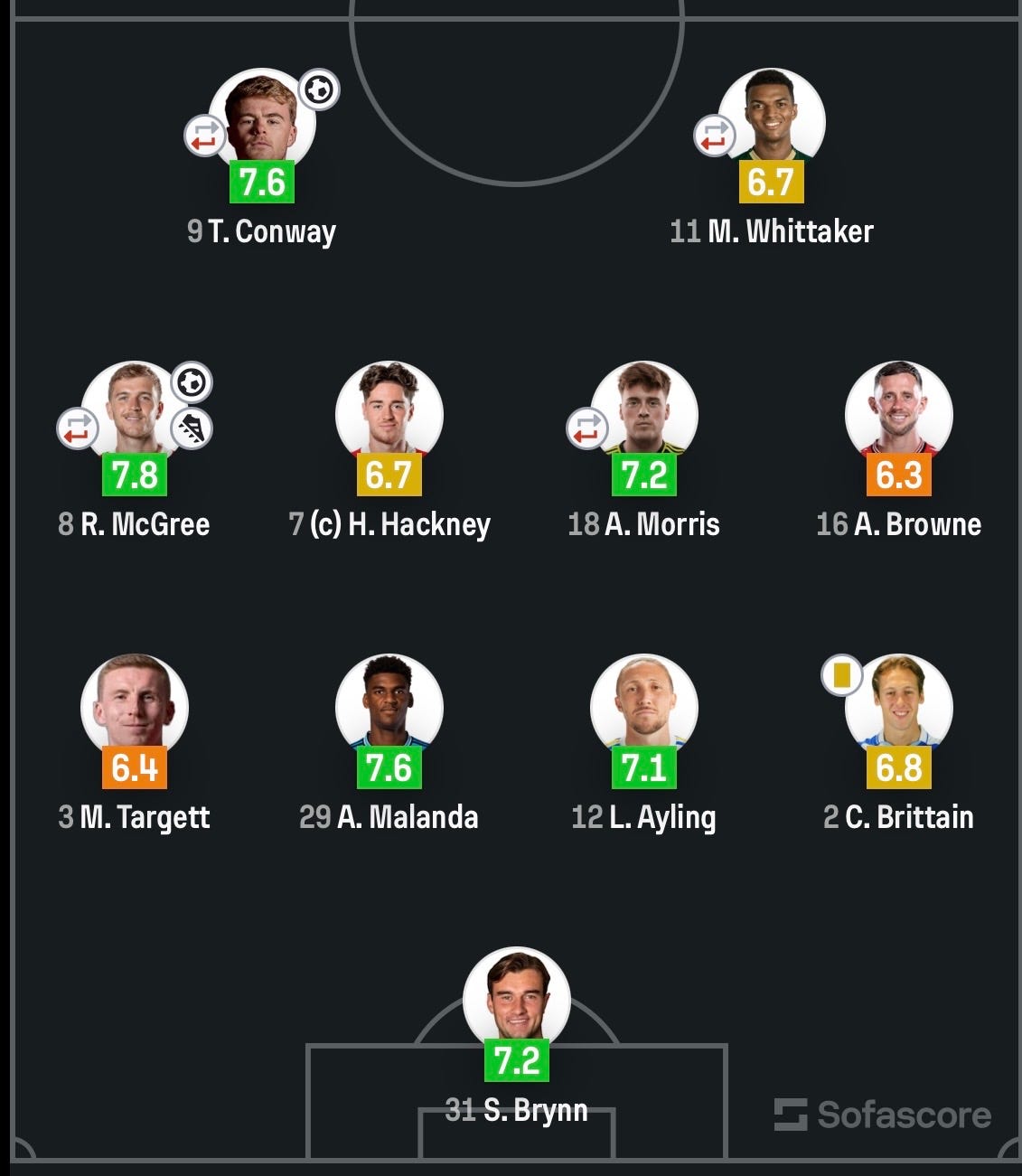
Ayling on the ball
Browne and Morris close in diagonally to each other
Ayling line-breaking pass to Whittaker
Whittaker, McGree and Conway close to each other
One-touch pass from Whittaker to McGree
Whittaker carries on the run
McGree, touch pass to Conway
Conway finishes
Now I want to fast-forward to now, especially the first half against Lincoln. It could not have been further from the concept Hellberg has been coaching all his life, and it shows why adapting to the players you have doesn’t work and never will for this style of manager. Boro were deservedly 1-0 down to Lincoln in the first half, and post-match he said, “I think, to be fair, I was not happy with my first half. My structure in the first half was not good enough. I should have helped the players better, so I think that’s on me a little bit and how clear I could have been, because it also needs even more [clarity] when you have a lot of new players.”
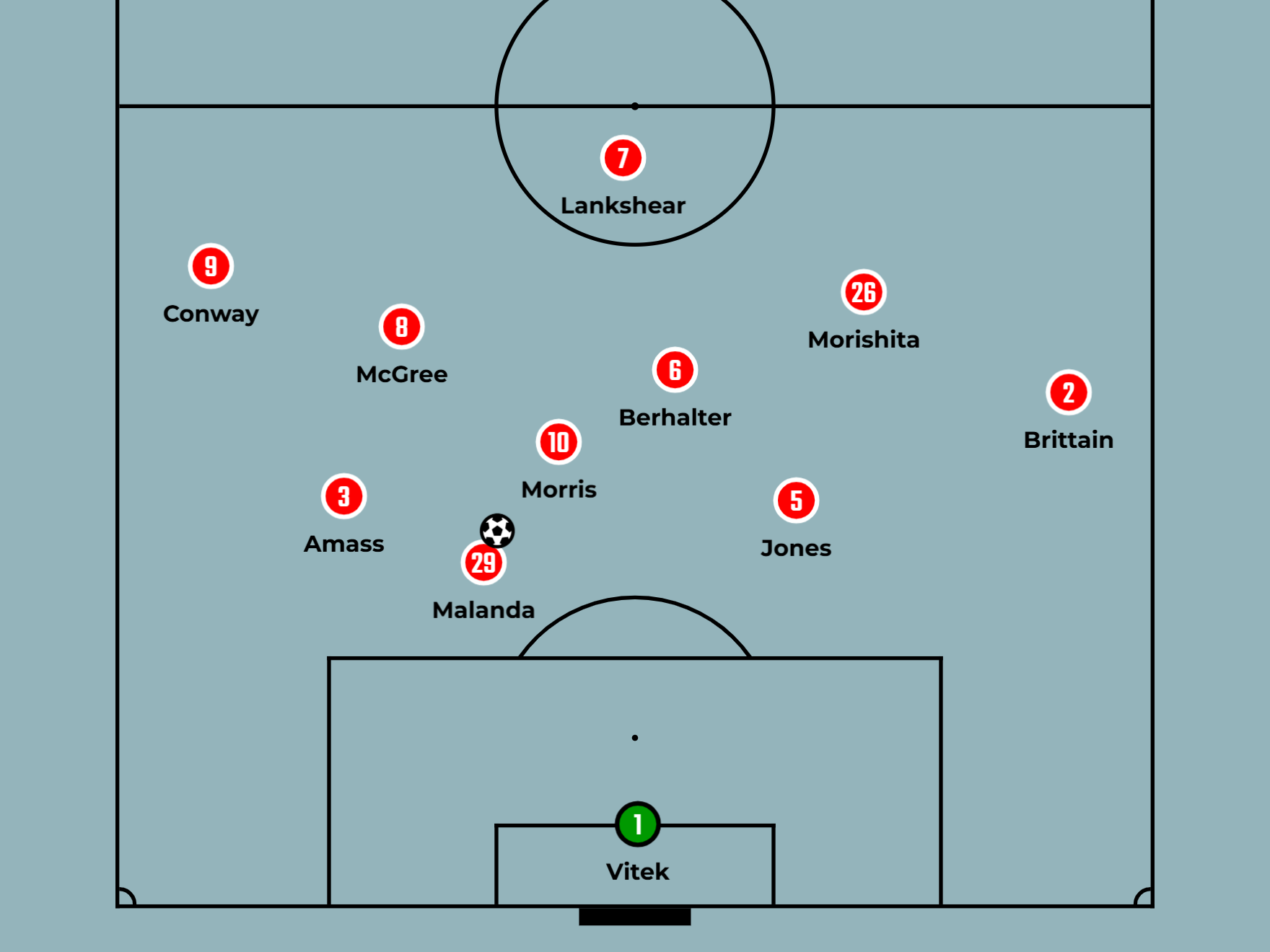
I watched the first half back for this, and there were no players in close proximity, nobody occupying central zones, nobody on the same wavelength in the final third.
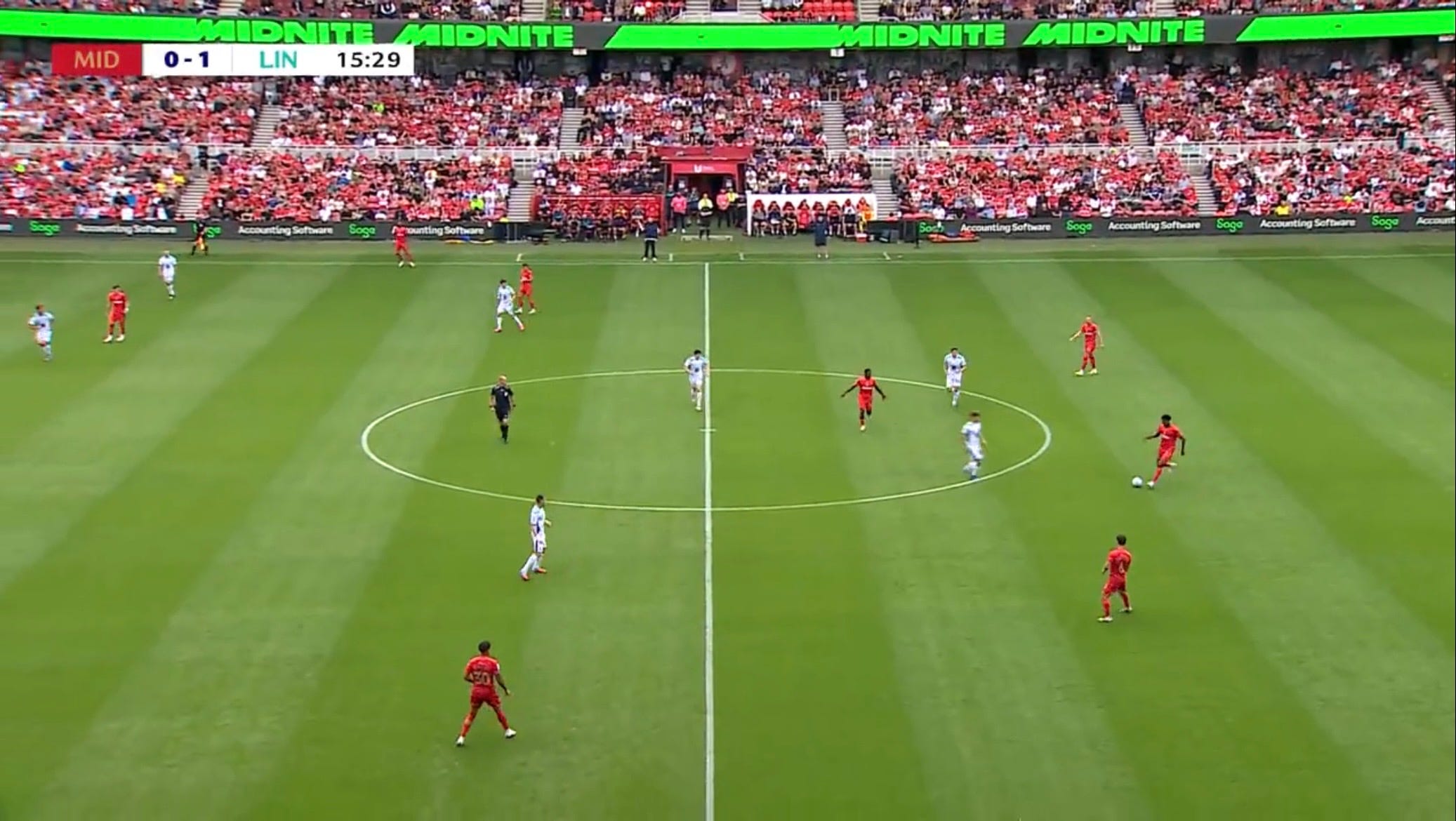
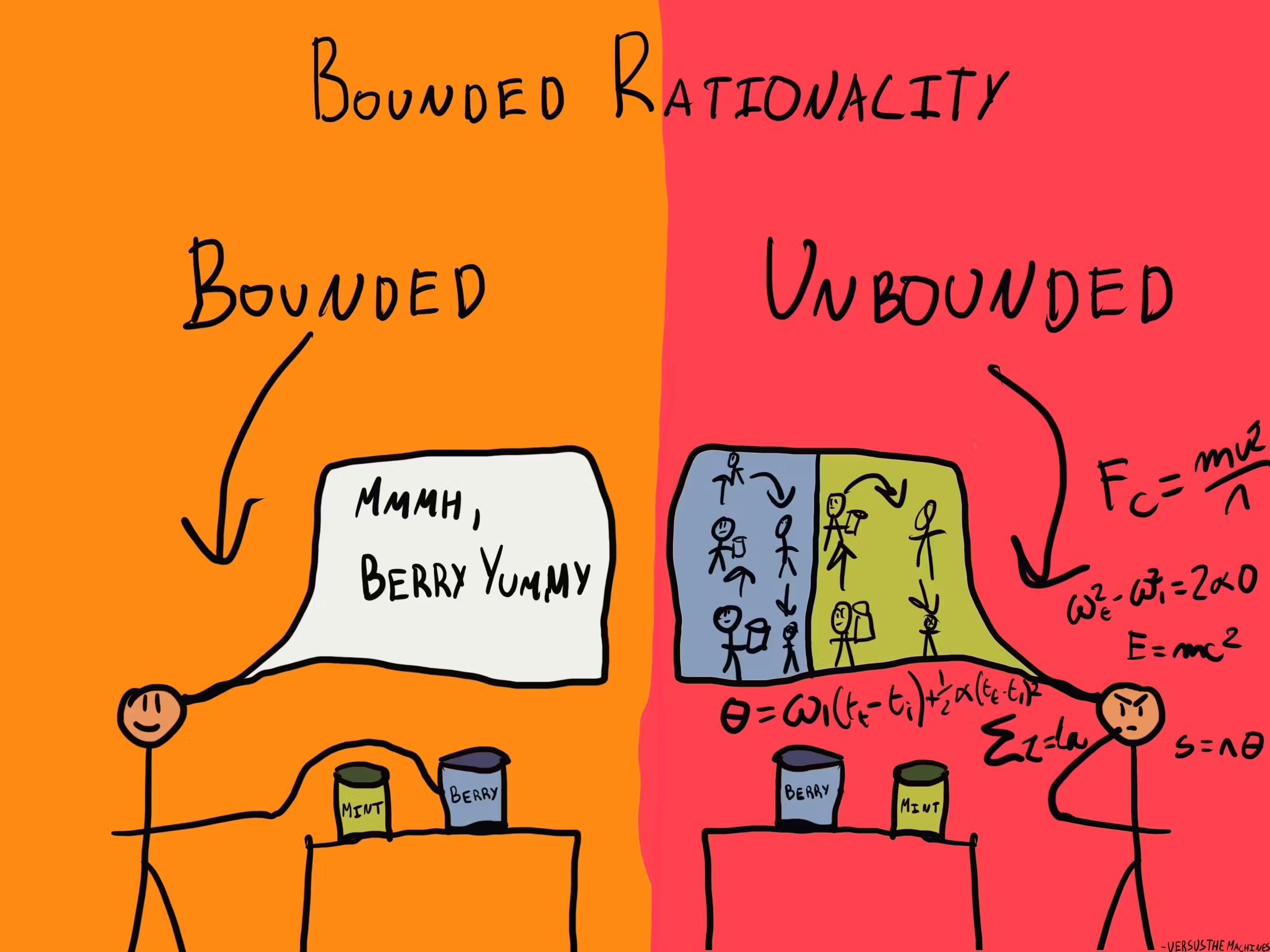
The players in the line-up do not make sense for this kind of football, this concept. And that’s the point - you can’t teach every player this concept; you either have it, or you don’t. Herbert A. Simon was an American psychologist who coined the theory of bounded rationality. This theory holds that some humans do not have the brain power to make optimal decisions, and they’ll always pick “good enough” - humans make rational choices that are limited by their mental limits, short time, and missing facts. You can apply this to football and what separates good from very good, very good from great, great from elite. You’re constantly making decisions, and the best decision within a concept always has to be the optimal one when the idea of the manager is to be on his wavelength.
In the second half, it’s rectified almost immediately. Players are in close proximity to one another, there are more passing options, far more chances are created, and they go on to win the game. The best player on the pitch? Riley McGree, and arguably Morgan Whittaker (second half only), because they understand what it means.
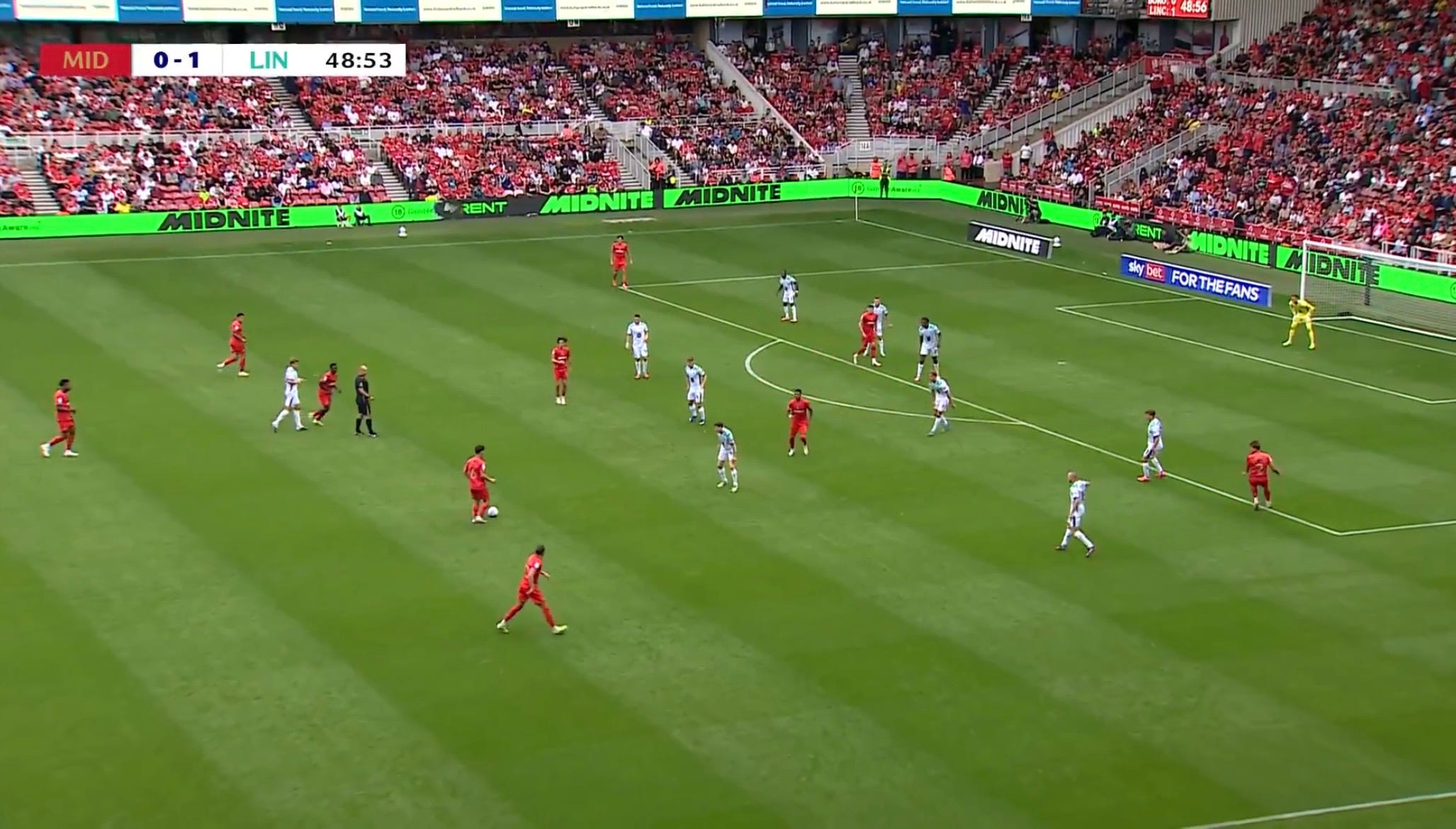
The Hellberg player is highly technical and intelligent, can play one-twos, pick up space when required, slow down and then speed up tempo, and play passes inside. This is what I believe, and this is why I say players like Kyle Joseph (clunky, technically limited), Ashley Phillips (not the best central passer), and Max Arfsten (100mph player) are not the style of footballer that would fit the ‘idea’. I don’t think Vitek does either, but I think you can get away with it as a keeper. It’s still another string untwisted on the guitar that Hellberg can’t play, even though he said he really likes GKs who can play out. Lankshear is the most obvious 9 for this system, so don’t attach my name to that opinion I’ve seen. This argument is in comparison to MY belief that Boro are capped at the top 4 with these signings rather than being able to win the league. You’ve got a Hellberg team at 80% rather than 100%. To me, Boro need four midfield-like players, perhaps even five on the pitch at all times. More players like McGree, more players with a high-level understanding of one touch/space movers. Speed of thought is quicker than any player. I can’t for the life of me understand why Boro haven’t put money down for Harry Amass and Ryoya Morishita. Two players who, technically and tactically, are top top level, and it’ll cost less than £7m.
Interesting opinion. As a Boro fan the first half against Lincoln felt like every match at the end of last season. Let’s face it, Lankshear saved us - and against Wrexham. I’m waiting for a full squad to choose from then let’s see how ‘Hellball’ will work this season with all the new players and picking his first choice team.
Great article. I think the intelligence and centrality plus passing vision is why Ayling has been preferred so many times at centre back - though he highlights the trade offs you get as what you gain in creative in possession play you lose in defensive solidity.
I do think a lot of the signings have been about trying to balance different needs ie creativity versus physical strength and endurance. Maybe we've seen an over correction in some areas?
Hellberg has stated that they're after a midfielder so it'll be interesting to see who they bring in.