
Dom Ballard.
Video analysis on 20 year-old Leyton Orient hitman Dom Ballard.

vs Cardiff City (H):
Going into this, my mind immediately went to Ballard being Charlie Kelman 2.0. Similar physique and height, and nippy, but after a minute or so, that comparison was put to bed. Kelman was, and is, an outright in-behind finisher, reactive in the box too. Ballard, at the very start of this game, showed he’s a more accomplished footballer. Dropping very deep to try and get on the ball, turning, and playing his striker partner, Alfie Lloyd, through. What is noticeable is that he naturally drifts to the right side of the pitch. In this game, he was much more comfortable looking to his left because he doesn’t scan when getting on the ball; he either opens his body to play a short pass, carries > passes with either foot or uses his body well by backing into his opponent using his arse and low centre of gravity, and then pushes away to get the pass off.
One of my concerns with players like this is how they deal physically with better centre-backs in their division. Ballard didn’t have an issue with this vs Cardiff. He knows he’s smaller, so he overcompensates, in the right way, with aggression and being annoying. He’ll run into you, squirm away, use every body part to make sure he makes it difficult for you to bully him, similar to how Jamie Vardy uses his body against defenders. Fling out a leg, chuck out an arm, wriggle, and somehow come away with the ball or get first contact. He’s a rat. Chased lost causes, never gives you time and will snap at you in duels. His goal in this game came from charging down the keeper and blocking a pass that goes into the net. Encapsulates the style of forward he is.
Ballard didn’t really get to showcase his movement in the box due to the nature of the game. Orient were looking to counter with Ballard as the main outlet, and not really attempting crosses into the box from open play. But he did look to attack the space when a play could develop. On his haunches, ready to push off his back foot to get ahead of his defender. He also showed his timing and aerial ability. Rather than making the mistakes a lot of footballers make by jumping both footed, Ballard creates a lane for himself to then jump and spring. Makes him a valuable asset against sides who want to sit deep, because in-swinging crosses with his jump timing and leap are a good way to create chances and unlock a defence.
Cardiff City (A):
Similar to the home game, and it shows to me it’s not a one off; his dog like mentality to chase lost causes is basic player instincts, and his way of compromising his size in duels, as I’ve already mentioned, is to do a lot of actions at 100pmh and be ratty with and without the ball. The sole intention is to make everything difficult for whoever he’s up against.
I can finally speak about his shooting ability, touches and movement — it’s my main thing I love analysing and looking for in a striker. The bare minimum to begin with for me is can you match the best defenders in the league physically; if you can, that’s half the battle. Now the second step for me is can you do multiple things as a 9 better or at a high enough level repeatedly — and that’s where in this game I loved what I saw from Ballard. A lot of strikers that I’ve looked at have one or two moves they use. Either a dart to the front post or hang at the back post. Ballard showcased vs Cardiff his ability to reset > move > reset again > attack the space. He was consistently trying to find the best possible area for him to either receive the pass, anticipate where the ball might go but also be ready to control > shoot quickly. I’ll give you an example:
Second thing I want to bring up is his timing and ability to control with his left and shoot with his right, or control with his right and shoot with his left, all in one motion. What separates a great striker for the level from a good striker is how quickly can they get their shots off and into the corners of the goal or getting snapshots off with a loose ball in the box. He can also create shots for himself too which is another bonus because you won’t always get service. Sometimes your movement can force the pass but also doing it yourself is a huge advantage for you and your team. Ballard can dribble at speed with both feet, can shoot with both feet and can either hit with power or curlers.
Scored a lovely curler from range after good work from himself by being smart and nudging the defender out the way subtly with the momentum to send his teammate away and then receive the pass.
Most strikers average around 17%+ of their total touches in the penalty box — Ballard is operating below that at around 15%; but it’s because he wants to get involved and drops deeper to pick up the ball. Again he gravitates to the right side, but also comfortable in the middle of the pitch too. He still only looks to his left mind you, as it’s easier to play from that angle, but it works because Connolly was on that left side and they interchanged well vs Cardiff. I’ll touch on what I think Ballard needs to improve on in a different section, but for now I’ll point at what he does naturally and how he does it. His link-play bag so far has been short passes to his strike partner, setting him away, or wriggling out of trouble and playing it wide left.
Stevenage (A):
I wanted to see how Ballard fared against one of, if not the best, defences in League One and the most physical central defender in Carl Piergianni. The XI and the components around Dom were different in this game. He wasn’t in a partnership; he didn’t have Alfie Lloyd or Aaron Connolly to support him. Instead, Orient had three behind him with two wingers and a third central midfielder pushing up to be more attacking. In the previous two games vs Cardiff, the 20-year-old was drifting right, and most of his best actions came from doing so; it looked natural for him to do that. Vs Stevenage, he was very much operating in a left side position when the ball was turned over.
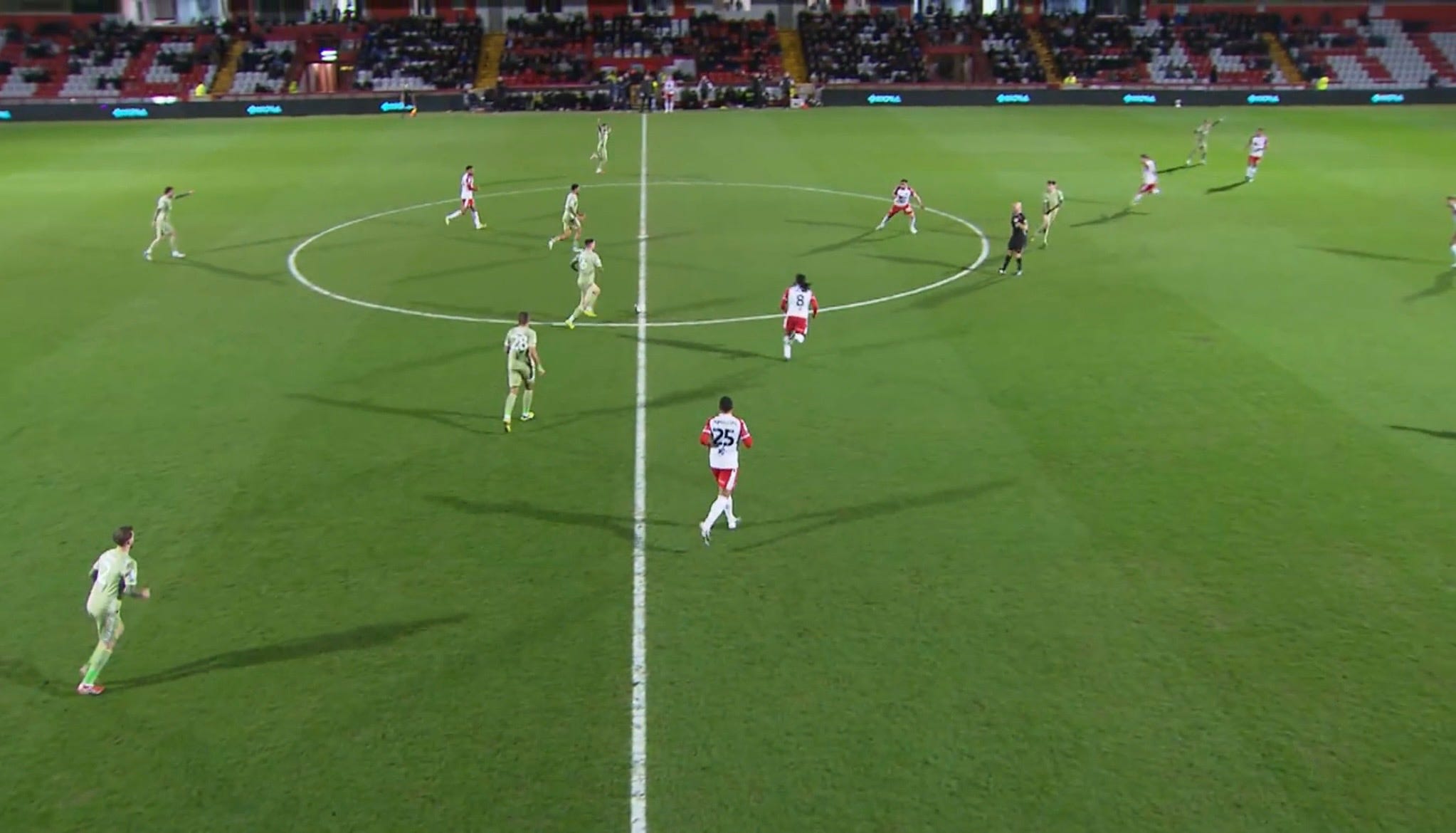
As expected, Ballard wasn’t able to get the better of Carl Piergianni in physical duels. But he did use his body well to shield the ball or draw a foul against other defenders, albeit it wasn’t as consistent. He wasn’t as 100mph, perhaps due to it being a midweek game and conserving energy due to the three-game week.
When it comes to his box movement in crossing situations or if a teammate is driving with the ball, he’s a pointer. He’ll do the old school point to where he wants the ball played. He attacks space well, and knows when to go into that zone. He might not always get the ball, but understanding where to be at the right time, will always bring goals if you carry on doing it consistently.
Once again Ballard showed his speed and carrying ability, one to get a shot off with his ‘weaker’ left foot and the other to get his team up the pitch but with the intention to score to put the game to bed and make it 3-1. His fitness levels to be able to have that much left in the tank when he’s been running all game also adds another string to his bow. He can change speed when dribbling with the ball too, it’s not all in one quick motion.
He scored two goals in this game, and I want to break down both of them individually as both strikes are different.
Goal #1.
First part. He’s already on the left side of the field, so he knows there’s no point holding that run as there’s a player behind him. So when the ball is past the midfielder, he immediately looks to attack the space which will give the centre back a decision to make, but also potentially open up more space for the midfielder to carry the ball.
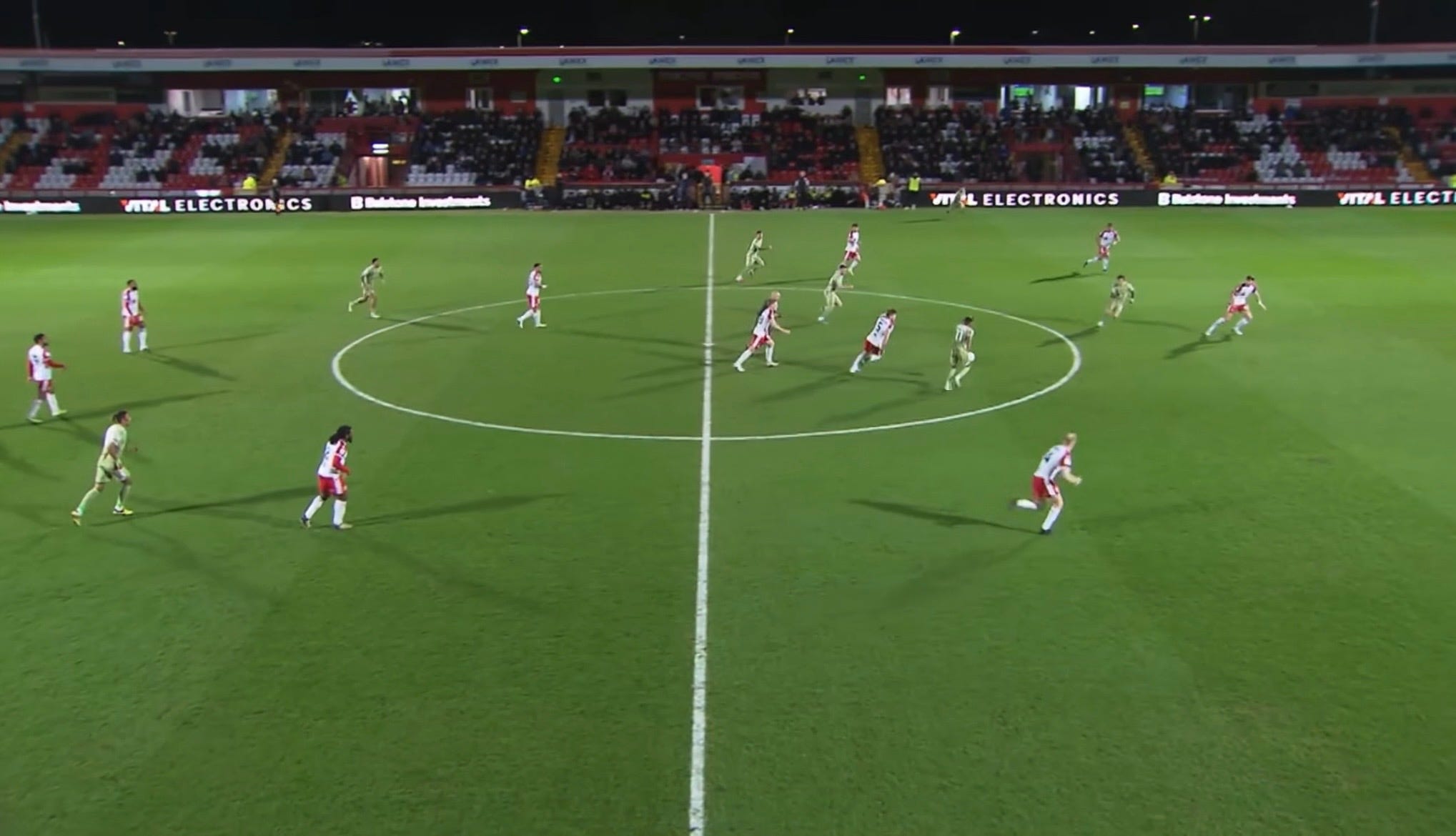
Second part. He curves his run so he can see the ball at all times and gives him the best possible situation to get a shot off, whilst also being able to see what the intentions of the centre back are.
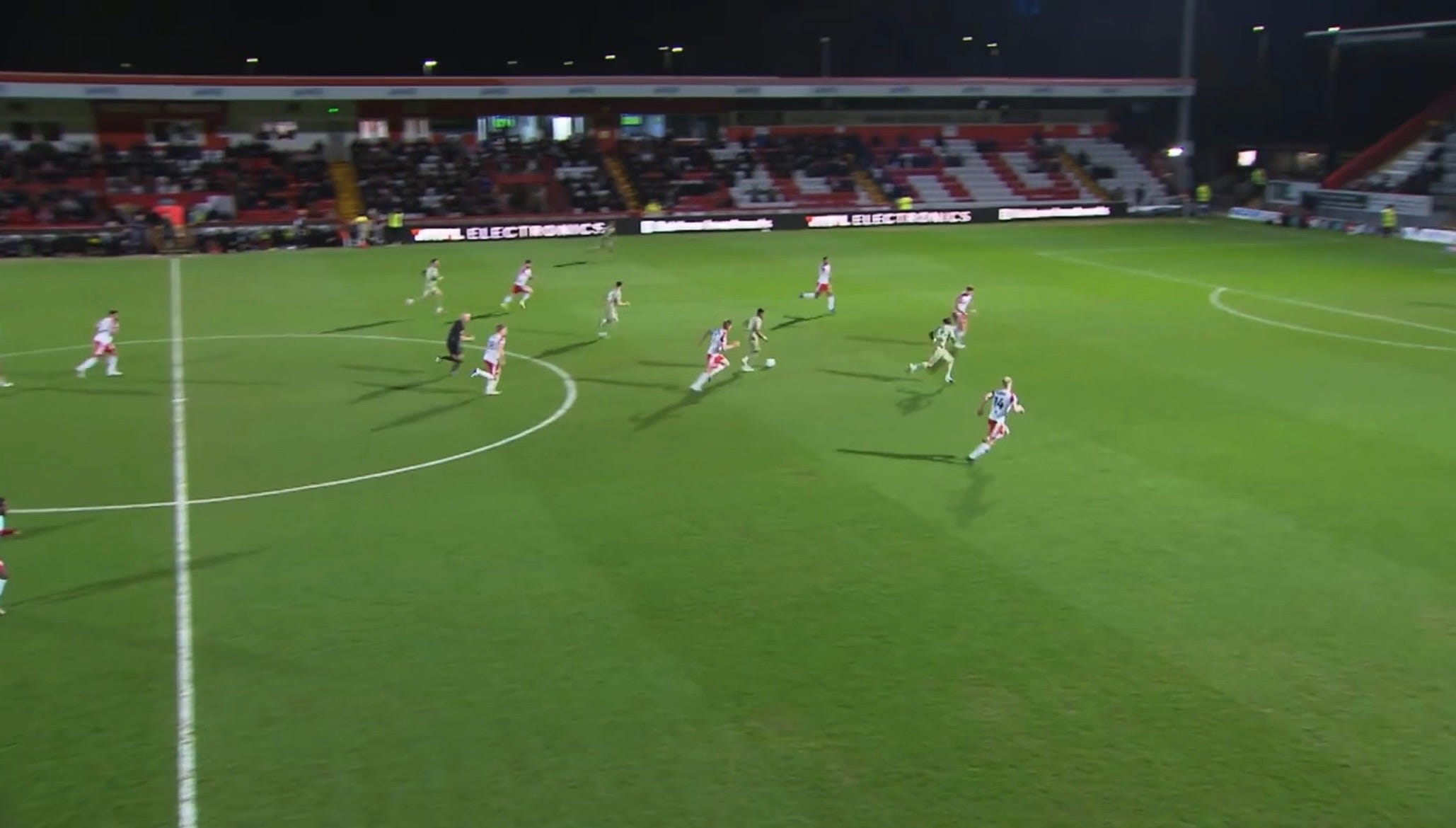
Third part. He lets the ball come across his body so it takes longer for the defender to get a block or at least attempt to dive in.
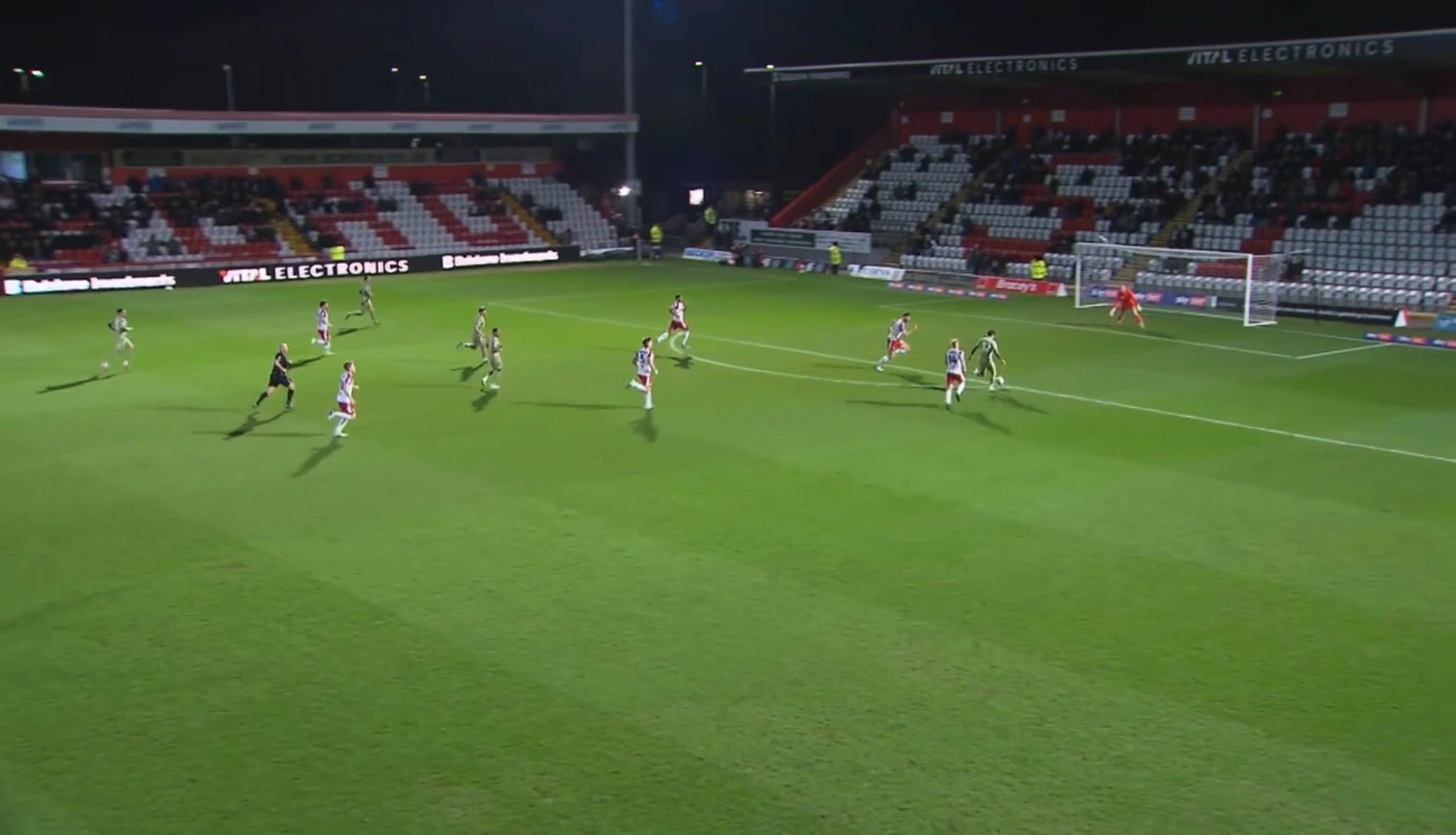
Fourth part. The finish. He takes one touch and waits for the ball to bounce back up again and strikes head down over the ball with power into the top right hand corner. It was a goal of a #9 in autopilot and knowing exactly what he was doing in split second decision making.
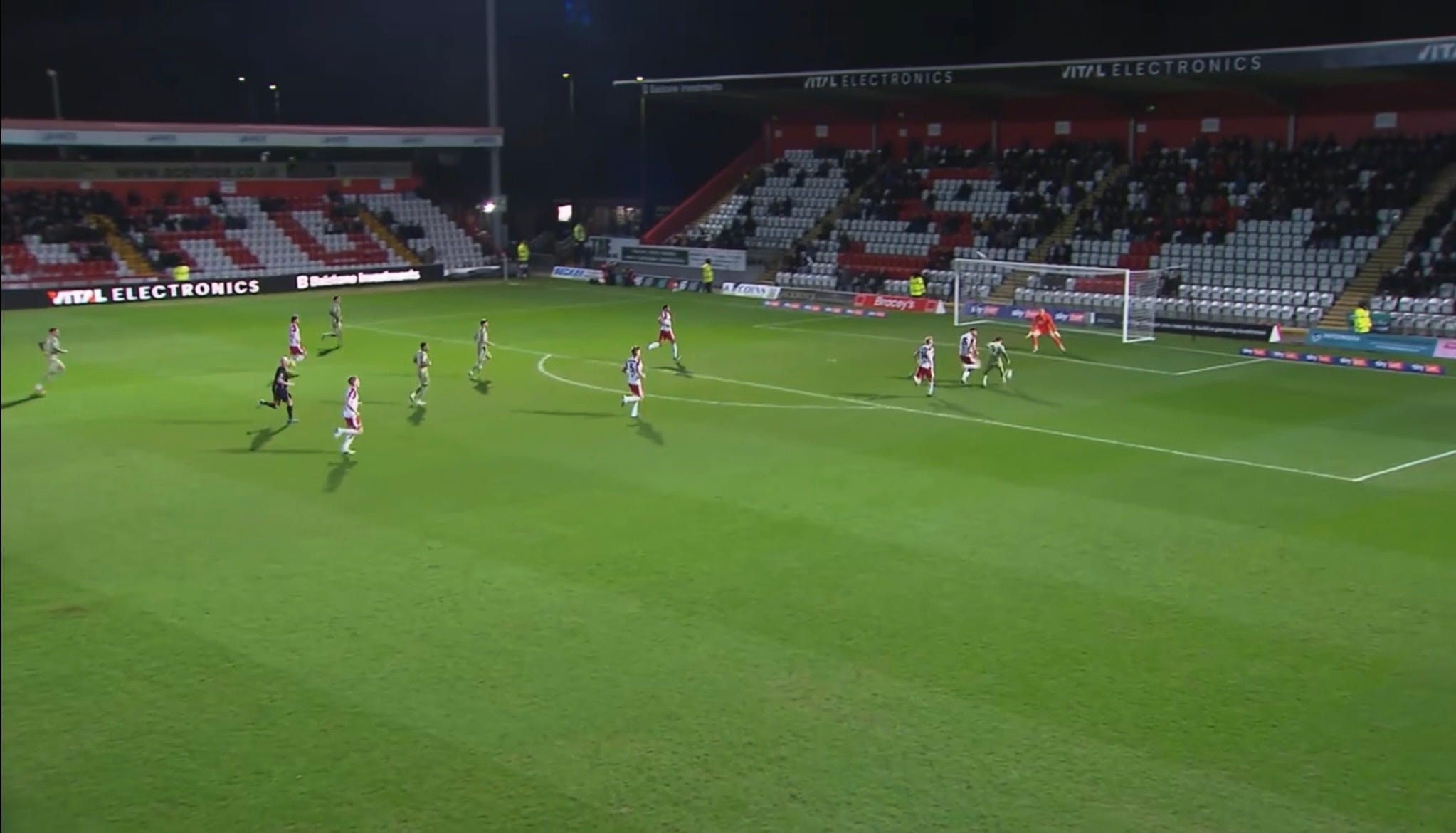
Goal #2.
His second goal is aided by a fantastic cross from James Morris, something that the left-back has always had in his locker. However from a 9 pov; the first part is Ballard noticing the space to run into before Morris has got the ball from out of his feet, but Morris has seen him make the move.
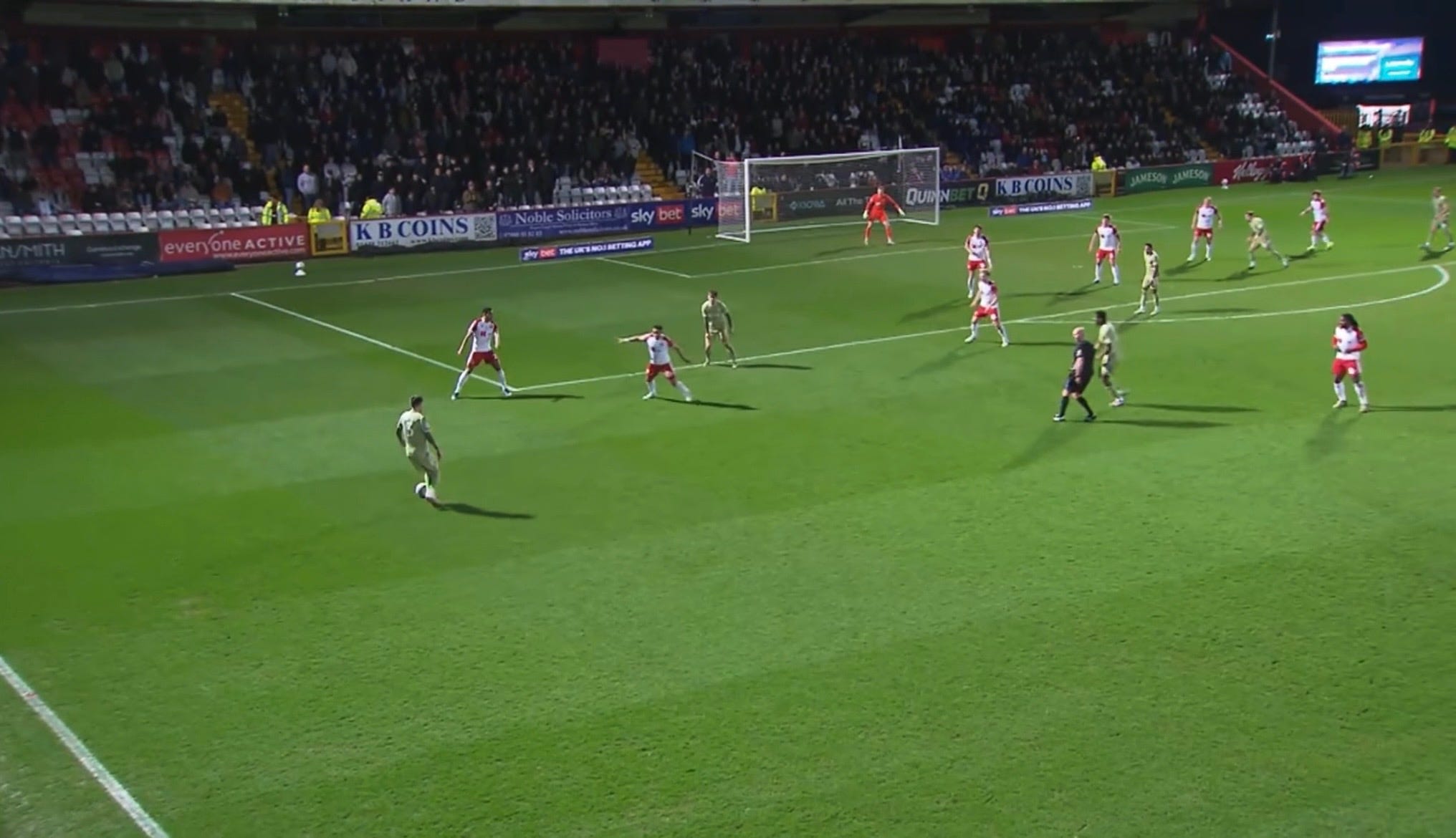
Second part. Timing. Make your move a split second before the ball is delivered. It’s late in the game, defenders might ball watch, fatigue could take over. It’s also a back four defending a cross. They hold, they wait, and then they follow. They mark their space rather than following the player, they pass him on in situations like this — there’s always an advantage for the attacker despite it numerically being 3v1 in the centre of the box. The attacker has the advantage of being able to freely move wherever he wants.
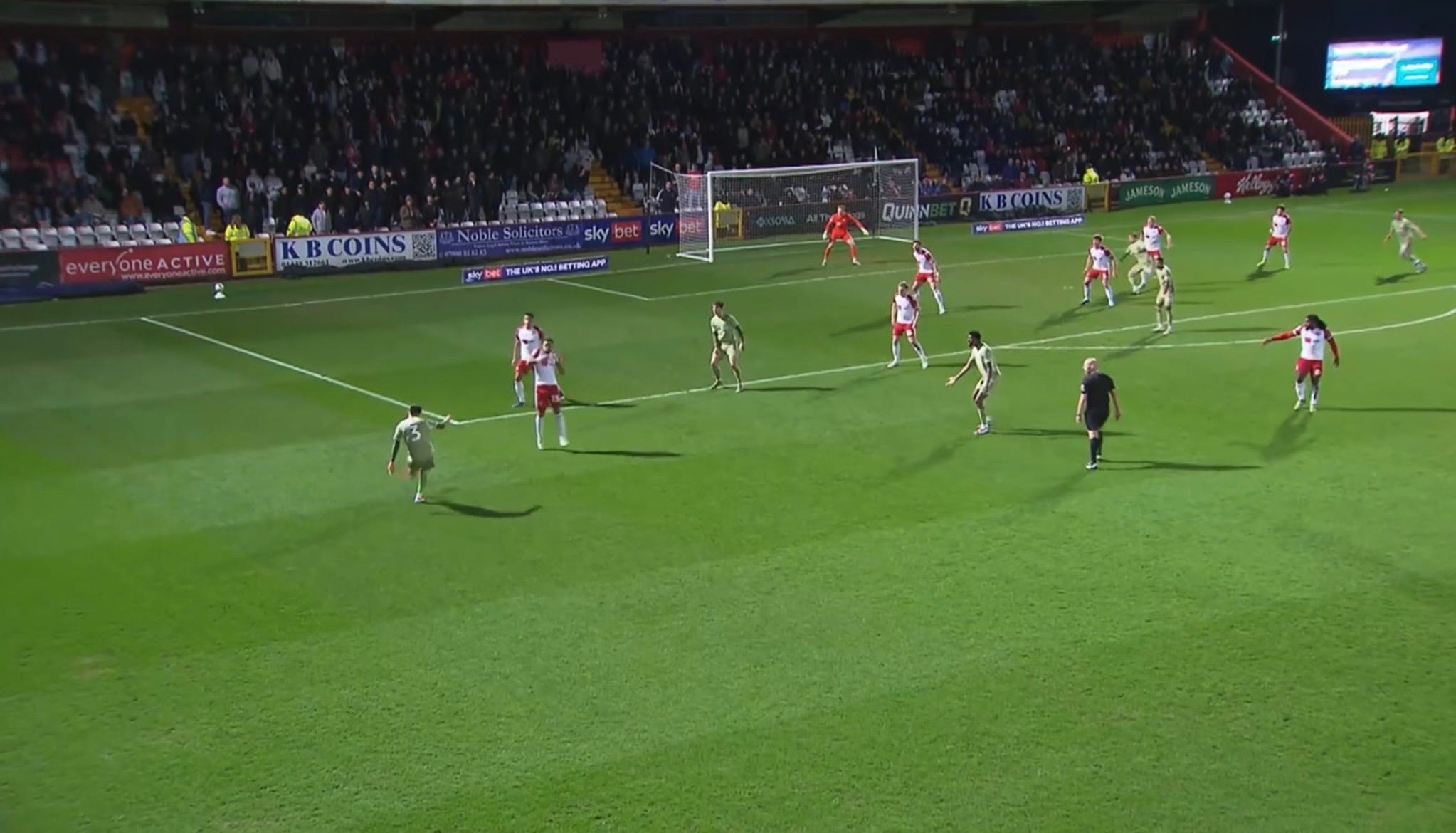
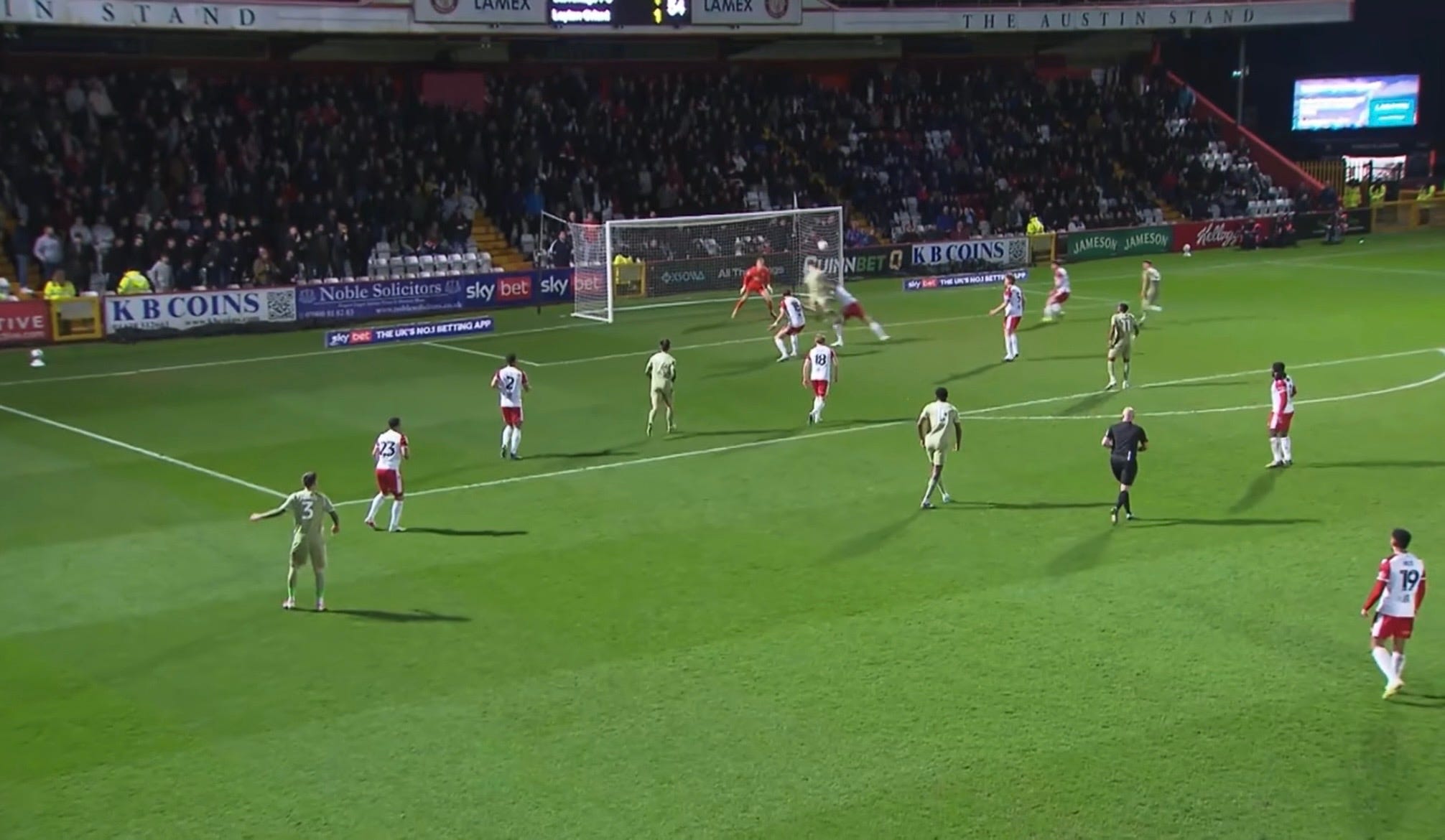
Third part. The finish. Remember I said vs Cardiff City that with his movement and jumping technique, Ballard could score a fair few glancing headers? Well here it is. Gets across his marker, jumps, glances it off the top of his head and into the back of the net.
AFC Wimbledon (A):
Again I wanted to see how Ballard would deal against a more physical side of League One. I already know the ability is there from watching him, but I needed to see what he’d be like against a side that will pin him and grab him. He knows his limitations from watching him in this game. Rather than going into duels with the centre backs, he dropped a little deeper and only engaged physically vs a wingback or midfielder, and used his body well when doing so. His way of using his body reminds me of when you get a new kitten and you pick them up, but they’re still a bit shy so they wiggle a bit so you let them go.
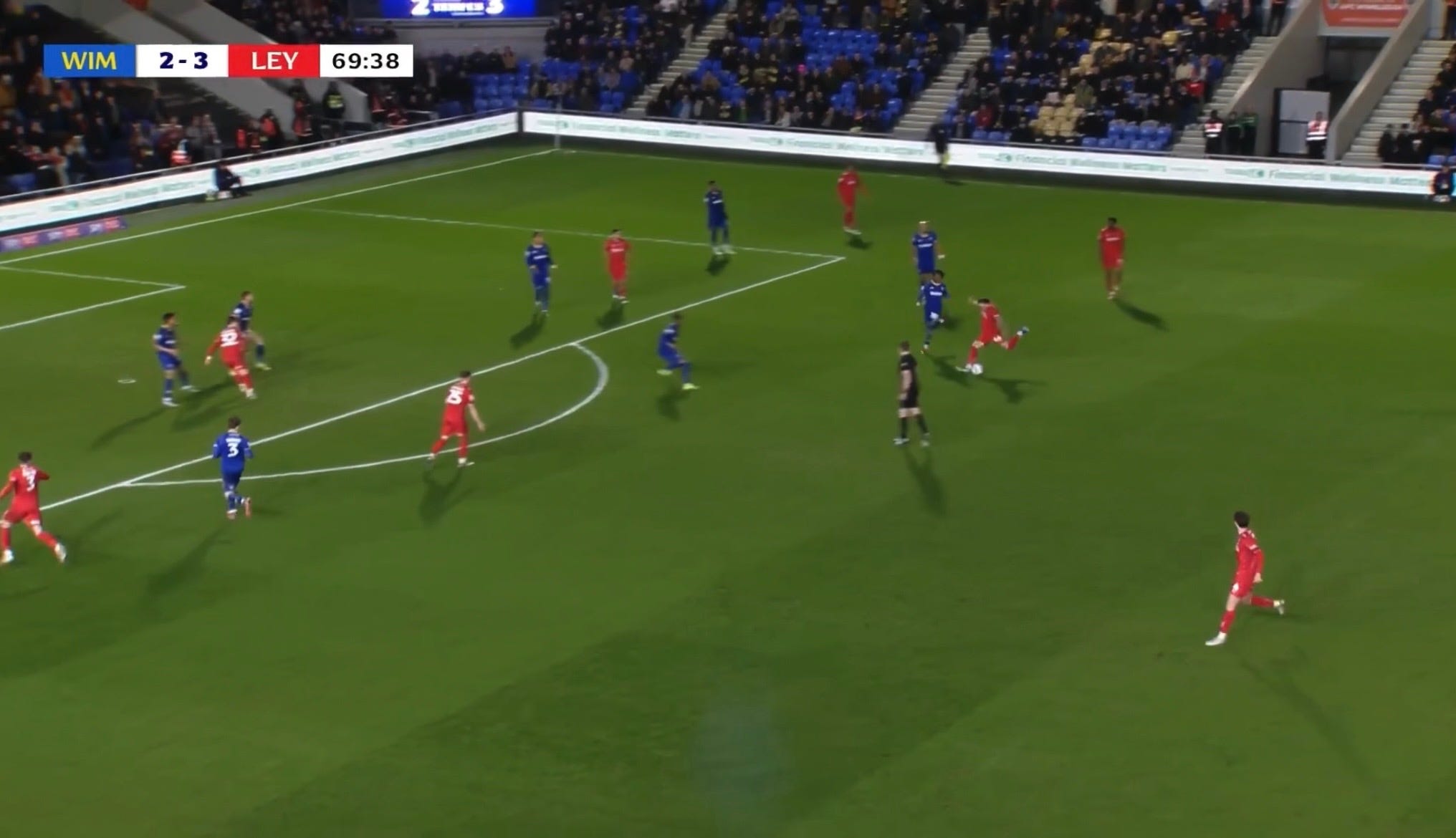
Because he wasn’t in a front two, he didn’t get on the ball as much or link-play as much as he’d perhaps like to. As I mentioned, he did drop deeper, but that was for physical reasons rather than in possession reasons, he didn’t look to show for the ball to give inclination or intent to be a bounce pass. Instead rather opting to make quick transitional runs into space or to drag the defender away for his teammate to have either a shot at goal, play him in or carry the ball themselves. A goal James Morris scored for example, the ball was on the right, Ballard closed the angle with his run, as you should; the shorter the ball has to travel in those situations, the easier it is to get a shot off — but him doing that opened up the space behind for something to happen.
He also did score a hat-trick in this game. The first one he didn’t know much about so I won’t cover that one, but the other two goals he definitely did.
Goal #2.
First part. He reacted late to seeing the pass about to be played, but adjusted his body to a side stance which allows him to push off quickly with his back foot. You will always have an advantage as a quick player vs defenders who have to be reactive.
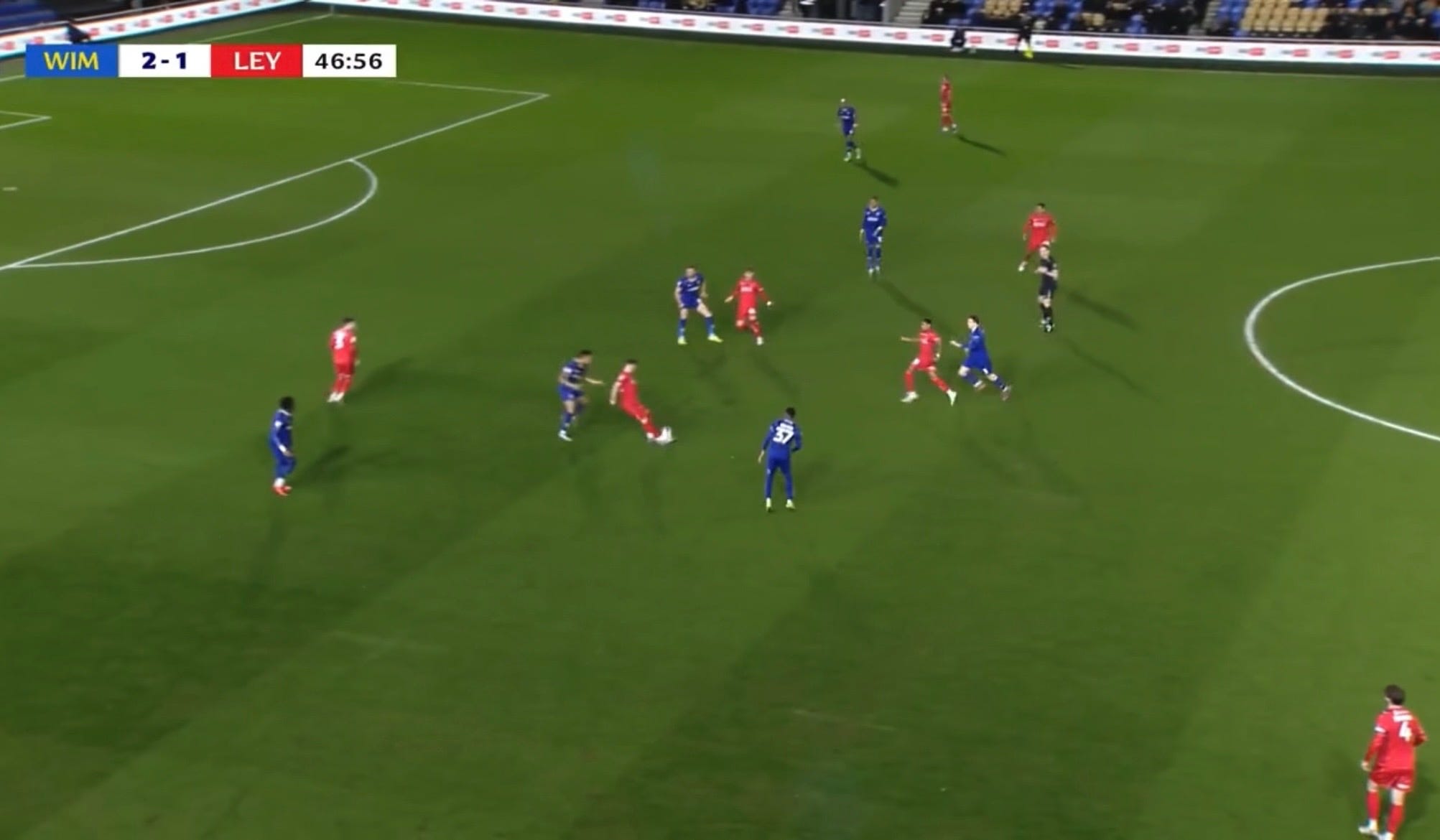
Second part. Using his acceleration over five yards and moving across the defender so he either loses momentum and has to change his stride pattern, or brings him down for a potential red card.
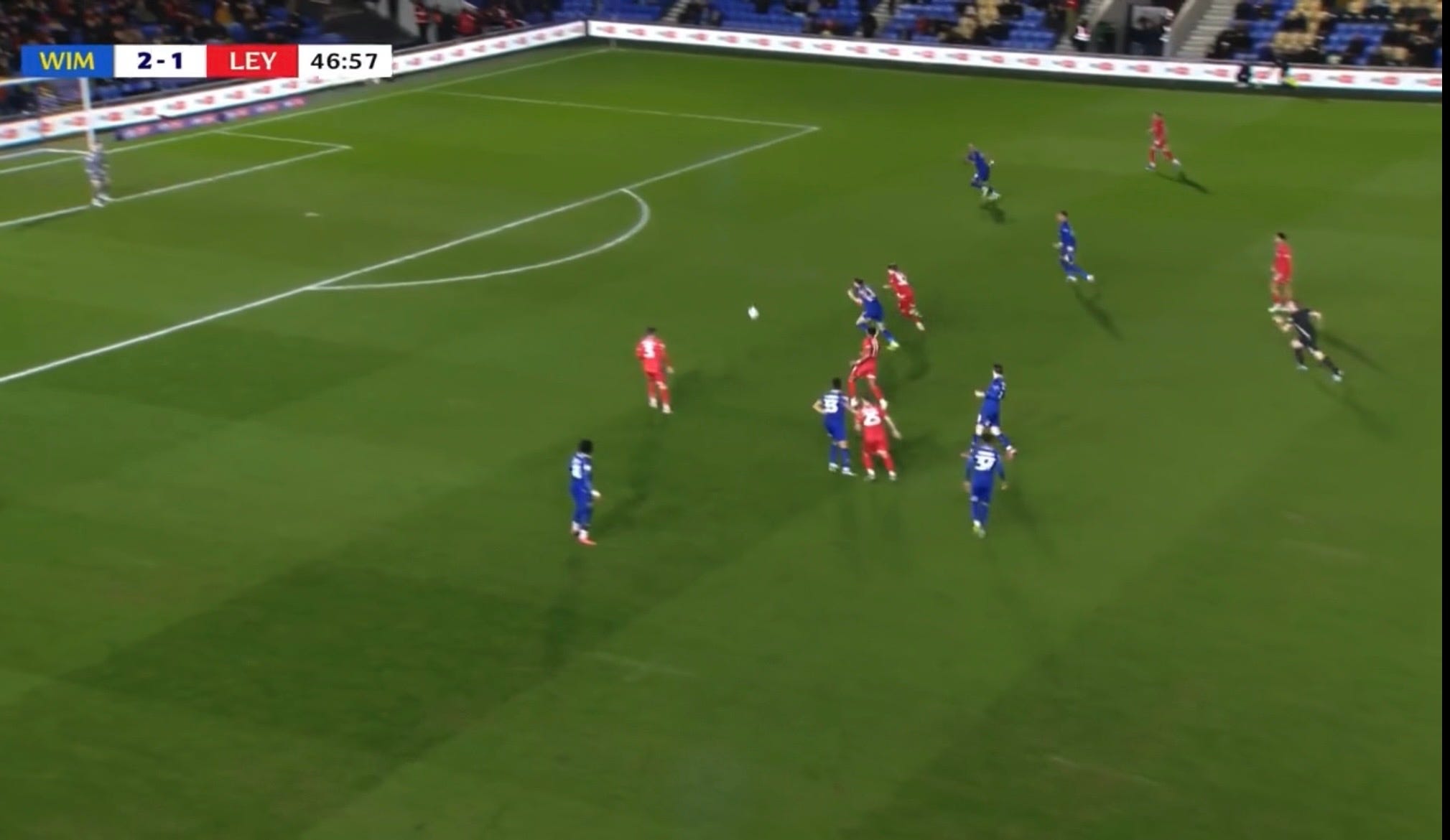
Third part. Takes one touch away from goal with his right foot. Gives him more time to get a shot off due to again, the defenders having more time to travel, it also gives the keeper a decision to make. Does he come off his line or does he stay. Either works for the striker in this position Ballard has created for himself.
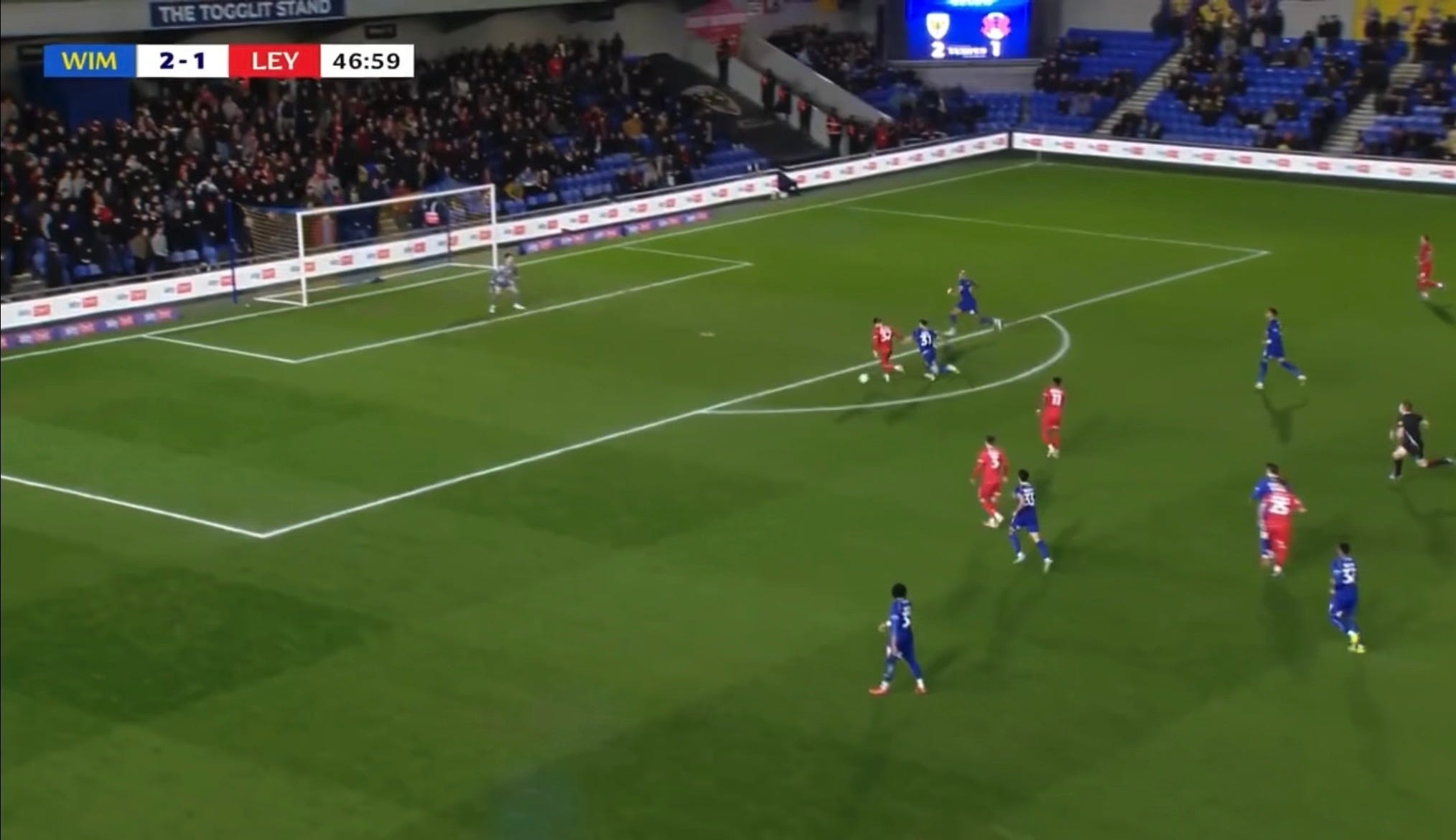
Fourth part. The finish. One touch to the left, one touch to deftly dink it over the keeper who’s already made himself smaller. The quick glance before the shot, the deception of the finish to make it look like he’s going left side but instead dinks it where the keeper hasn’t got all his weight and positioning with his right arm.
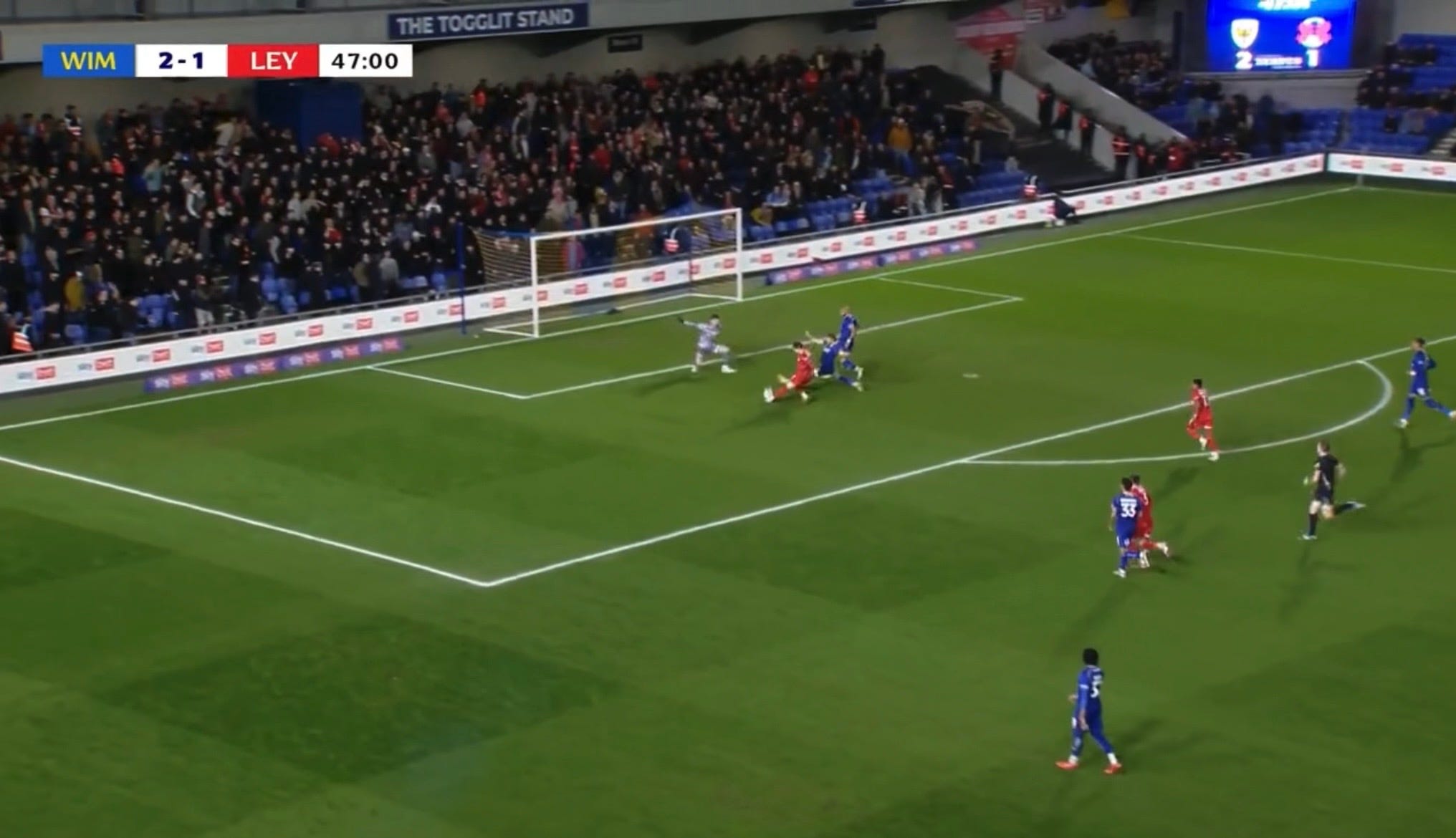
He tried to repeat the action of this goal later in the game but dragged his shot wide.
Goal #3.
It’s classic poachers instincts this goal. Arguably what most managers will be more impressed by. Ballard is on his toes, leaning forward, anticipating something might happen and follows in after the shot has been taken. Keeper spills, he’s there to tap in.
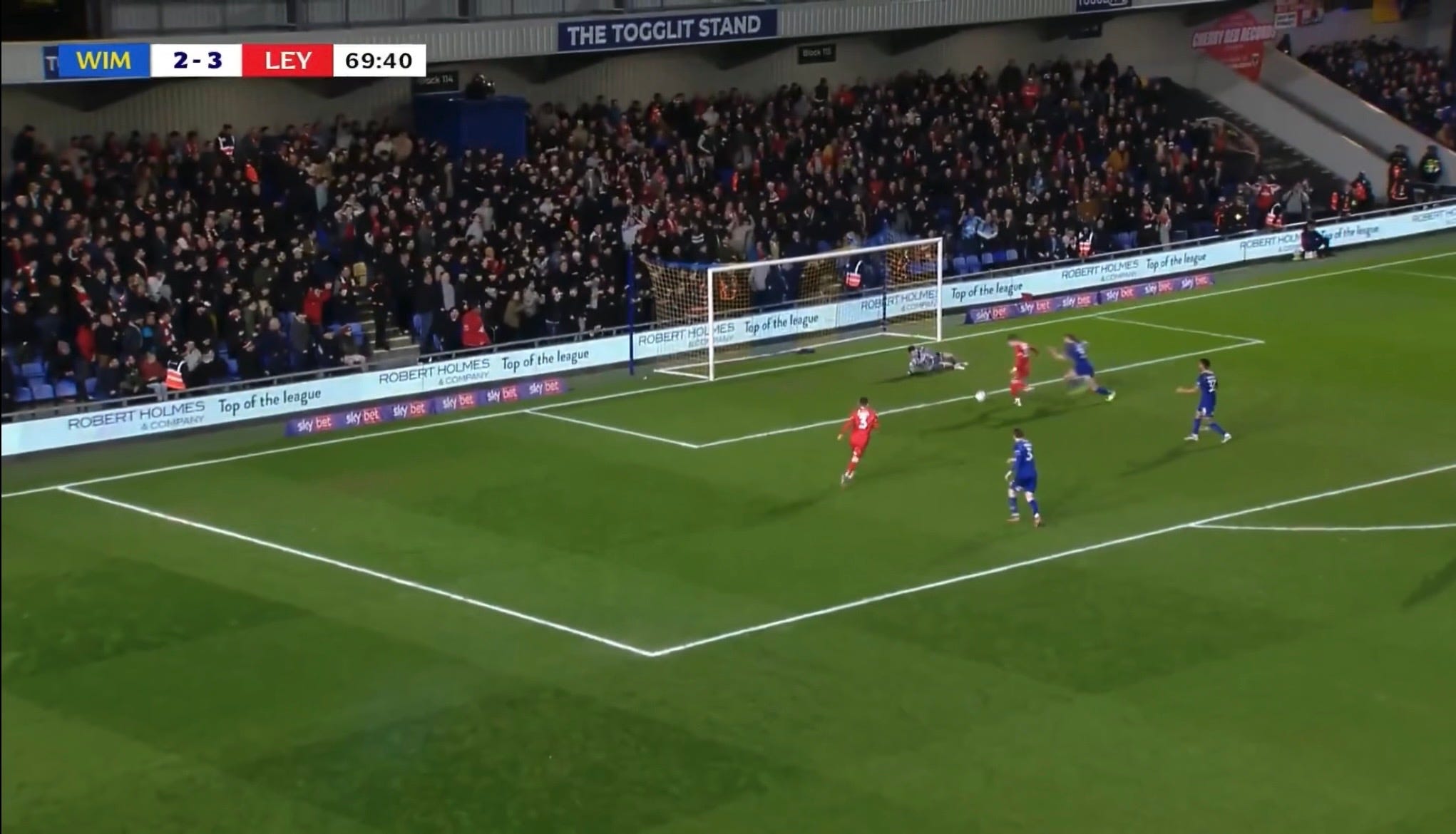
Ballard’s goal catalogue this season.
The questions regarding strikers should always be why did they score so many goals. What was the team composition, what was his skillset, what did he do when certain players got the ball. Strikers will score goals in any setup if it suits them, strikers will score more goals if the setup suits them, and they have more comfortable and repeatable ways of scoring goals, which don’t always require service. Looking through Ballard’s goals this season, there’s a clear bias for the left side service, but also, he’s very effective in transitional moments. He can shoot with both feet, no issue; he can also score with his head. 34 shots and 10 goals with his right foot, 23 shots and 6 goals with his left foot, 17 shots and 5 goals with his head. That’s a player who can score in multiple ways. However, most of his goals have something in common: he likes to be at an angle when striking the ball. He takes the ball away from the goal when shooting either down the left side or down the right side. An angle creates a better way of hitting corners, as your body is already showing that way to generate more power. Even with his headers, he’s running across the goal to get a glance on it.
Two years ago, I created my own shot placement model. Instead of relying solely on xG to identify finishing ability, I wanted to see where strikers actually got their shots on target and where they were aiming. As a child, you were always taught to aim for corners and shoot across the goal so if the keeper saves it, your teammate can tap in.
Here’s the original tweet:
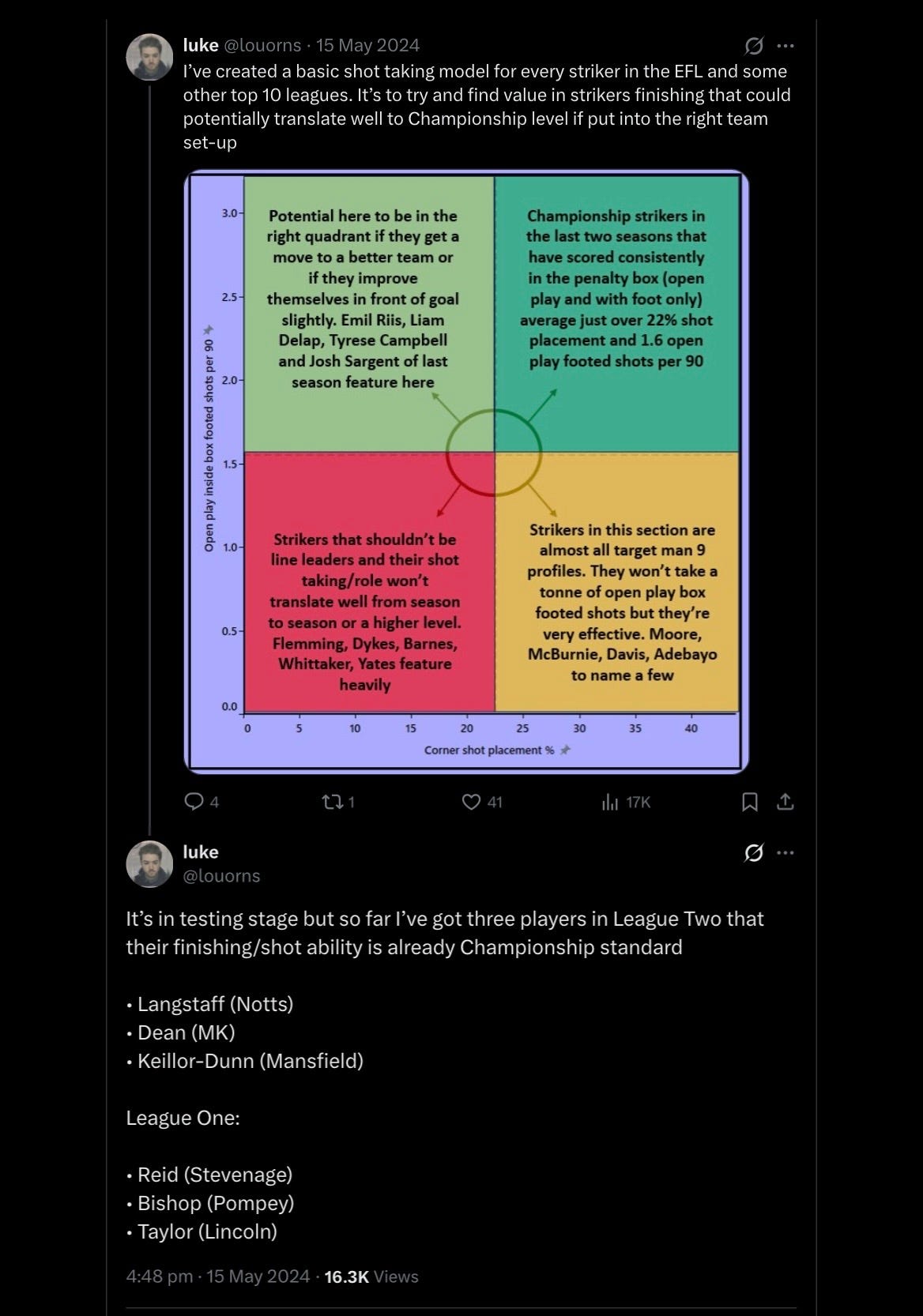
Based on my estimations from 2024, Langstaff is in the Championship with Millwall, Max Dean is in a league of similar quality to the Championship in Belgium with Gent, and Keillor-Dunn is at Wrexham. Joe Taylor is a huge outlier in all of this because he’s operating at a shot placement career average of around 35%, which is over double the average in separate leagues, absurd levels to be honest.
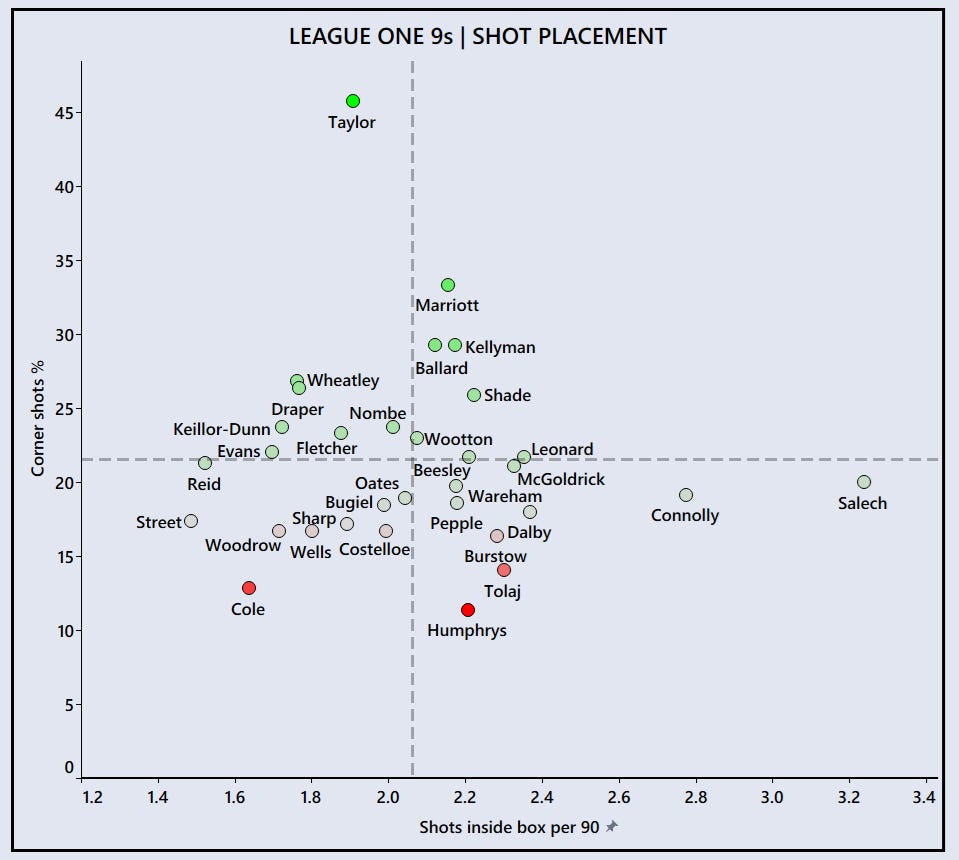
League One strikers who get promoted to the Championship tend to drop their shot placement % around 5-10%. Ballard is currently operating at 29%, and the average in the league above for goal-scorers in the league above is 22%, so a good omen for him and showing in my eyes, as well as the data that I personally like to use.
His next move.
If you want to get the best out of Dom Ballard. Spoiler alert, I think he’s absolutely ready for the step-up, and he’s only 20 years old. Football is always about maximising strengths and minimising weaknesses. To maximise this player, I think he’d work better in a system with another player who’s up alongside him. Doesn’t have to be a striker. But he’s a very good one touch link player/bounce passer. one-touch. His comfort zone in settled possession is on the right side. He likes to play with the left side to play into. But when he’s not linking play or dropping there, he prefers to come across the centre backs when the ball is in a crossing situation. He does attempt to do the same on the opposite flank, but his bearings to do that consistently aren’t quite there yet.
A left back with good delivery from deeper areas
An attacking player who gets forward centrally
A winger who is low cross first over shoot first
Team style encourages counterattacks or transitional moments as soon as the ball is turned over.
A midfielder who is capable of playing through balls
I think most teams in the Championship should be after him, but if your club has those five traits already in the squad, or plans to have them in the squad. Dom Ballard, who’s only 20, would be a shrewd addition in the summer window. The two teams that immediately come to mind if they don’t get promoted are Derby and Millwall. Millwall as a potential Ivanovic replacement or Derby for a Szmodics replacement, and playing off Agyemang (should they keep him) or Morris.
Brilliant stuff